The quick answer
To dry clothes indoors in winter, do what countries with long, cold or wet seasons do: spin longer, hang every piece separately, keep the laundry in the middle of the room with moving air, and use warmth that is made for drying. Japan dries indoors on ceiling poles and in ventilated bathrooms, Sweden uses heated drying cabinets, and British homes hang laundry high on a ceiling airer where warm air collects. In an American home, the easiest way to copy all three is a compact warm-air drying closet such as the Qinux AirdrobeX.
Every winter the same question comes back: the balcony is frozen, the line in the yard is useless, the dryer is expensive to run (or there is no dryer at all), and a pile of wet laundry needs somewhere to go. Americans tend to treat indoor drying as a plan B. In many other countries it is simply how laundry works, and they have spent generations refining the habits that make it fast and fresh. Here is what they do, and what is worth borrowing.
Why winter makes indoor drying harder
Clothes dry when water leaves the fabric and moves into the air. In winter three things slow that down: the air is cold, so evaporation is slower; windows stay closed, so the damp air around the laundry is not replaced; and clothes are heavier (sweaters, jeans, flannel sheets) and hold more water. The result is the familiar two-day wait and, too often, a musty smell. Every tradition below attacks at least one of those three problems.
Japan: heya-boshi, the art of room drying
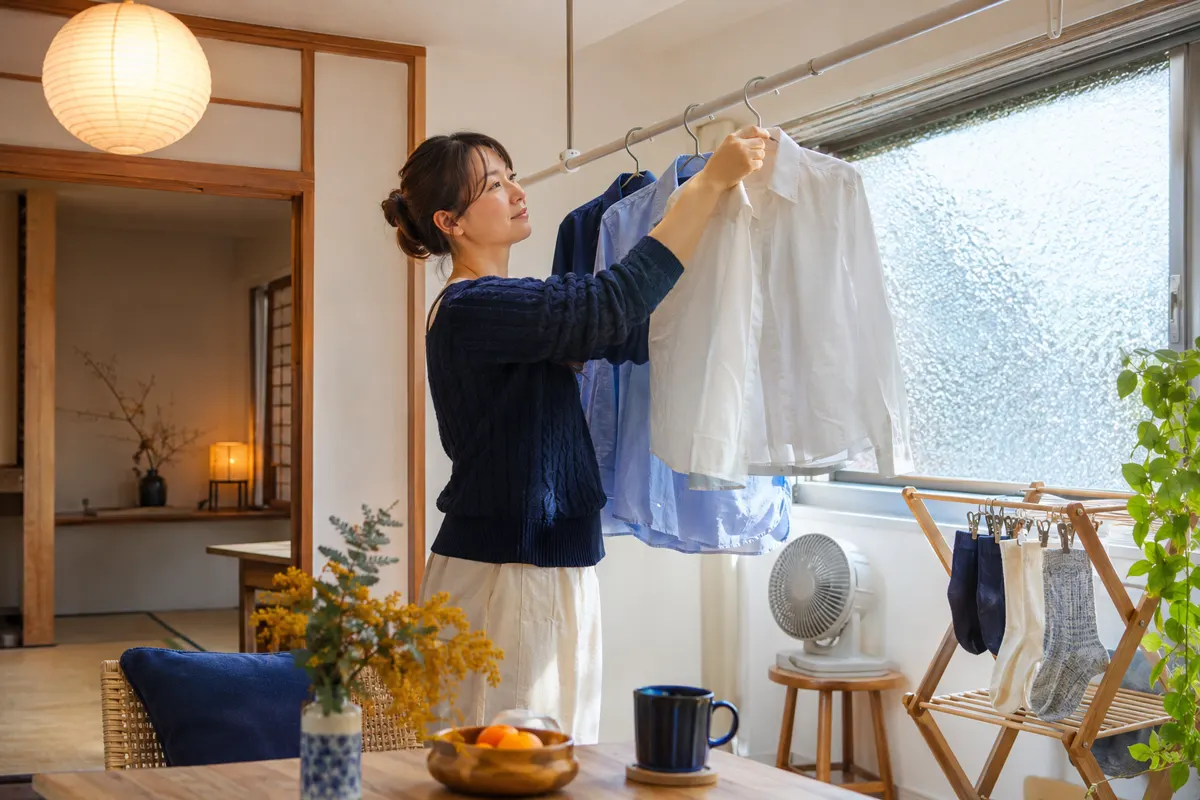
In Japan, hanging laundry indoors is so common it has its own word, heya-boshi (部屋干し, “room drying”). Many apartments have no dryer, and the rainy season and humid summers made people experts at drying inside. A few habits stand out:
- Hang high, hang centered. Ceiling-mounted poles, hooks above door frames and poles across window frames keep laundry up in the warmer air and out of the way. Japanese laundry guides also advise keeping the rack away from walls and windows, where moisture has nowhere to go and can cause condensation and mold.
- The bathroom as a drying room. Many Japanese bathrooms have a built-in ventilation and drying unit, so laundry dries behind a closed door while moist air is pulled outside.
- Room-drying detergents. Supermarkets sell detergents labeled for indoor drying, made to fight the “half-dried” smell.
- Spin longer, space wider. A longer spin removes more water before hanging, and an “arch” layout (long items on the outside, short in the middle) lets air flow up through the center.
- Winter bonus. Some Japanese guides point out that in dry, heated winter rooms, the moisture from laundry can make the air a little more comfortable, as long as there is no condensation.
What to copy: hang in the middle of the room, not against the window; give every item its own hanger; and add a fan or dehumidifier so the damp air keeps moving.
Sweden and the Nordics: the drying cabinet
In Sweden, many apartment buildings have a shared laundry room, the tvättstuga, and it often comes with a drying room or a drying cabinet (torkskåp): a tall closet where clothes hang on rails while warm air is blown through them. Drying cabinets are also common in Nordic homes and are popular for wet outdoor gear, snowsuits and wool.
What to copy: the idea that drying works best in a small enclosed space with warm air moving through hanging clothes. You get fast drying without tumbling, so knits keep their shape and outdoor clothes stay in good condition. This is exactly the principle behind a portable warm-air drying closet.
The UK: the ceiling airer
Older British and Irish homes often have a ceiling clothes airer (sometimes called a pulley maid): wooden rails on a pulley that you lower, load and raise back up near the ceiling, often in the kitchen. Warm air rises, so laundry near the ceiling dries faster than laundry on a low rack, and it stays out of the way.
What to copy: height and warmth. Hang clothes high in the warmest room you have, not in a cold spare bedroom. One British habit not to copy is draping clothes over radiators: it is common, but it blocks the heat, dries unevenly and adds a lot of moisture to one spot.
South Korea: warm floors and enclosed balconies
Korean homes are traditionally heated from the floor (ondol), and many apartments have an enclosed balcony or utility room where laundry dries on standing racks. The steady, gentle warmth of a heated home helps clothes dry without any direct heat on the fabric.
What to copy: a dedicated drying spot. Instead of laundry spread over chairs and doors in every room, choose one place with warmth and airflow and dry there every time.
Italy and Spain: the drying rack that never goes away
Across southern Europe, clothes lines outside the window are a classic sight, and in winter the folding rack (the Italian stendino, the Spanish tendedero) simply moves inside. Tumble dryers are far less common than in the U.S., so households plan laundry around the weather: wash in the morning, hang immediately, never leave clothes in the drum.
What to copy: the timing. Wash early in the day and hang straight away. Our guide to the best time to do laundry explains why morning washes dry best.
Around the world at a glance
| Country | Tradition | What it solves | How to copy it at home |
|---|---|---|---|
| Japan | Heya-boshi on ceiling poles, ventilated bathroom | Still, humid air | Hang in the center of the room, add a fan or dehumidifier |
| Sweden | Drying cabinet (torkskåp) in the laundry room | Cold air, slow evaporation | A warm-air drying closet for hanging clothes |
| UK | Ceiling airer near the ceiling | Cold, low air | Hang high in the warmest room |
| South Korea | Warm floors, enclosed balcony | Laundry everywhere | One dedicated drying spot |
| Italy / Spain | Folding rack, morning washes | No tumble dryer | Wash early, hang immediately |
Putting it together in an American home
- Start with a long spinUse the fastest spin the care label allows. Less water in means less time drying (see 10 tips to dry clothes indoors fast).
- Hang every piece on its own hangerShirts, blouses and dresses dry on both sides at once and come out smoother.
- Pick one warm drying spotCenter of a heated room, away from cold windows and outside walls.
- Keep the air movingA fan, an open door or a dehumidifier replaces the damp air around the clothes.
- Use warmth made for dryingNot the radiator or space heater: a drying cabinet does the Swedish trick in a small footprint.
- Watch for condensationFogged windows mean too much moisture. Ventilate for a few minutes and dry fewer items at a time.
If your clothes still smell stale after drying, the cause is almost always slow drying. Our guide on how to get rid of the musty smell in clothes explains how to rescue them.
Our recommendation: Qinux AirdrobeX
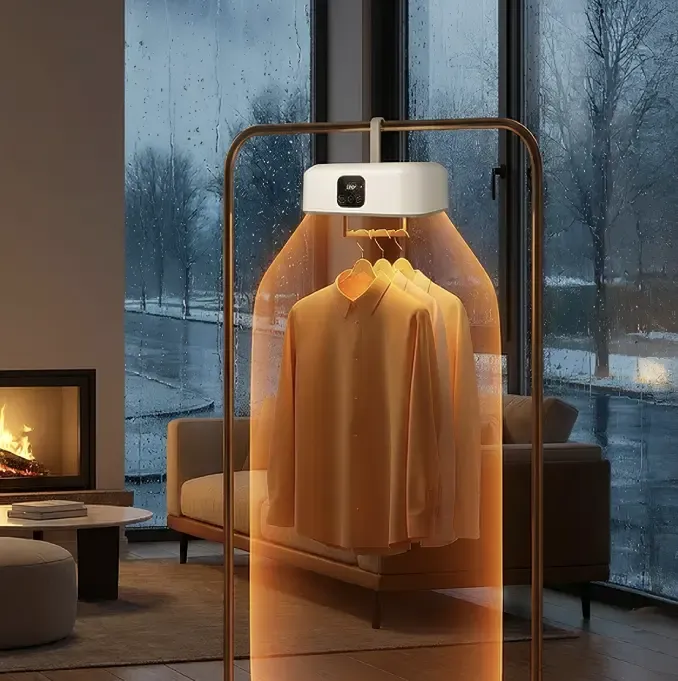
Look closely at the best traditions above and they share one idea: hanging clothes, enclosed space, warm moving air. That is the Swedish drying cabinet, the Japanese ventilated bathroom and the warm air under a British ceiling, and it is exactly what the Qinux AirdrobeX brings to an American apartment. You hang your laundry on hangers inside its cover and the unit on top circulates 360° warm air around every piece. It is the most practical way we know to dry clothes indoors in winter without a vent, a renovation or a laundry room.
- A drying cabinet you can fold away — stands in a corner while in use and stores compactly afterwards.
- 360° warm-air circulation — dries both sides of sweaters, jeans and towels even when it is freezing outside.
- Antibacterial UV light — according to the maker, it helps eliminate bacteria, dust mites and odors, the cure for the “half-dried” smell.
- 600W from a regular outlet — with a touch panel, remote control and programmable timer that switches it off by itself.
- Gentle on fabrics — nothing tumbles, so wool and knits keep their shape, just like in a Nordic drying cabinet.
Owners rate it 4.8/5 from 1,289 reviews on the official site, and 94% would recommend it. One unit is $109 at the 50% launch discount, with free shipping and a 14-day money-back guarantee. It is sold only through the official website.
Want the details first? Read our full AirdrobeX review or see the packages on the AirdrobeX home page. Always follow the care label on each garment and the manufacturer’s instructions.
Frequently asked questions
What is the best way to dry clothes indoors in winter?
Remove as much water as possible with a long spin, hang each piece on its own hanger with space around it, put the rack in the middle of a room rather than against a cold window or wall, and keep the air moving with a fan, an open door or a dehumidifier. A warm-air drying closet is the fastest indoor option because it surrounds the clothes with moving warm air.
How do Japanese people dry clothes indoors?
Indoor drying is so common in Japan that it has a name, heya-boshi (room drying). Many homes use ceiling-mounted poles or hooks above windows and doors, bathrooms with a built-in ventilation dryer, and detergents labeled for room drying. People spin longer, space clothes apart and use a fan or dehumidifier to avoid the half-dried smell.
Is it OK to dry clothes on a radiator or heater?
It is better not to. Clothes draped over a heater or radiator can block the heat, dry unevenly and, with some heaters, become a fire risk. Use gentle warmth from the room instead, or a device designed to dry clothes.
Why do clothes smell when dried indoors in winter?
When clothes dry slowly in cold, still, humid air, bacteria have time to grow in the damp fabric and leave a musty smell. Faster drying, more airflow and not overloading the rack are what stop it.
Does drying clothes indoors help with dry winter air?
A little moisture from laundry can make a very dry heated room feel more comfortable, which is why some Japanese guides suggest drying indoors in winter. The trade-off is condensation: if your windows fog up or walls feel damp, the room has too much moisture and needs ventilation.