Winter, a rainy week, a tiny apartment with no dryer — sooner or later everyone faces the same pile of wet laundry and nowhere to put it. Drying clothes indoors does not have to take two days or leave everything smelling stale. It comes down to three things: less water to start with, more air moving around each garment, and less humidity in the room.
Not sure which part of the problem is yours to fix? Our guide on why clothes take so long to dry indoors separates what you can control from what you cannot.
The 10 tips
- Use the fastest spin your fabrics allowThe washer’s spin cycle removes far more water than air ever will. An extra spin on towels and jeans can cut drying time dramatically.
- Shake every piece before hangingA quick snap opens up the fibers, reduces wrinkles and lets air reach the whole surface.
- Use hangers, not just the rackShirts, dresses and blouses dry faster and smoother on hangers because both sides are exposed to air.
- Leave space between itemsCrowded clothes trap damp air between them. Aim for a hand’s width between each piece.
- Keep the air movingA fan pointed at the laundry or a slightly open window replaces the damp air around the clothes with drier air.
- Control the humidityIn a closed room, all that water ends up in the air. A dehumidifier or a well-ventilated room keeps clothes drying instead of soaking it back up (here is how to dry clothes with a dehumidifier).
- Use gentle warmth, safelyA warm room helps, but never drape clothes directly over heaters or radiators — it is a fire risk and can damage fabrics. For a safer kind of warmth, see how Japan, Sweden and the UK dry clothes indoors in winter.
- Turn thick items inside out and flip themPockets, waistbands and seams hold water. Turn jeans and hoodies inside out and flip them halfway through.
- Dry heavy items separatelyTowels and jeans slow everything around them. Give them their own spot with the best airflow.
- Do not leave wet laundry in the machineClothes sitting damp in the drum are the number-one cause of that musty smell. Hang them right away (and if your dryer just broke, here is how to dry clothes while you wait for a repair).
What to avoid
- Drying in a closed bedroom with no airflow — it raises humidity and can lead to condensation on windows and walls (living in a residence hall? see how to dry clothes in a dorm room).
- Overloading the rack — it doubles drying time and causes stale smells (the same goes for a drying closet; see the 8 most common portable dryer mistakes).
- Putting clothes on heaters — unsafe and hard on fabrics.
The fastest option: a warm-air drying closet
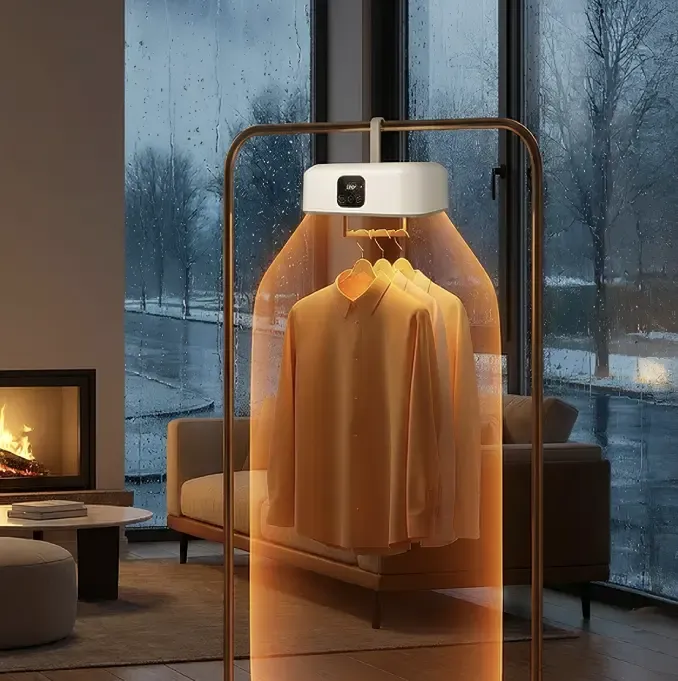
All of the tips above are about one thing: getting dry, moving air around every garment. That is exactly what a portable warm-air clothes dryer does on its own. The Qinux AirdrobeX works like a compact drying closet: you hang your clothes inside its cover, and it circulates 360° warm air around every piece while an antibacterial UV light helps eliminate bacteria, dust mites and odors. It runs on 600W, has a remote control and a programmable timer, and is quiet enough for a bedroom. Owners rate it 4.8/5 on the official site. As Sonia put it: “The clothes come out dry and much faster than hanging them to dry indoors.”

Our recommendation: Qinux AirdrobeX
If you dry laundry indoors every week, the Qinux AirdrobeX is the option we recommend, because it does all ten tips for you at once. Instead of juggling a fan, an open window, a dehumidifier and a crowded rack, you hang your clothes on hangers inside its cover and the unit on top surrounds every piece with 360° warm, moving air. That is the airflow, spacing and low humidity this guide is about, packed into one compact closet that stands in a corner.
- Fast, even drying — warm air reaches both sides of every garment, so you are not waiting a day or two for jeans and hoodies.
- No stale smell — the antibacterial UV light, according to the maker, helps eliminate bacteria, dust mites and odors.
- Rain or shine — it works the same in winter, on wet weeks and in apartments with no balcony.
- Hands-off — 600W, a regular outlet, remote control and a programmable timer.
Owners rate it 4.8/5 on the official site. It starts at $72 per unit on the 5-pack ($109 for a single unit at the 50% launch discount), with free shipping and a 14-day money-back guarantee.
Want the details first? Our full AirdrobeX review covers setup, everyday performance and what comes in the box.
Frequently asked questions
What is the fastest way to dry clothes indoors without a dryer?
Spin them well in the washer first, hang each piece separately on hangers with space between them, keep the air moving with a fan or open window, and lower the humidity in the room. A portable warm-air clothes dryer is the fastest option, because it surrounds the clothes with moving warm air.
Is it bad to dry clothes indoors?
Drying a load indoors adds moisture to the air. In a small, closed room with no airflow, that extra humidity can encourage condensation and mildew, and slow-drying clothes can start to smell musty. Good ventilation, a dehumidifier or a dedicated drying closet keeps the moisture under control.
How long do clothes take to dry inside?
On a rack in still, humid air, a full load can take 24 hours or more, and heavy items like jeans and towels even longer. With good airflow it is much faster, and with warm circulating air faster still.