The quick answer
If your dryer broke, first check the plug, breaker, lint filter and vent, then switch to a simple at-home plan: extra spin, hang every piece on its own hanger, keep air moving and never leave a wet load in the washer. Use a laundromat for bulky items like comforters. The easiest way to keep everyday laundry moving, while you wait for a repair or instead of replacing the machine, is a compact warm-air drying closet like the Qinux AirdrobeX.
A dead dryer never picks a good moment. It quits on a Sunday night with a full load in the washer, a week before a trip, or just as the weather turns cold and nothing dries outside. Then the repair visit is booked for next week, the part is back-ordered, or the quote is so high you are not sure the machine is worth saving. Meanwhile the laundry keeps coming. Here is a calm, practical plan for the days (or weeks) without a working dryer.
Why dryers break (and what you can check yourself)
Before you assume the worst, it helps to know the usual reasons a dryer stops drying. Some are quick fixes; others need a technician. (Many of the same faults are why we also explain whether it is safe to leave a dryer running overnight.)
- Power problems — a tripped breaker, a blown fuse or a loose plug. Electric dryers often use a double breaker, so the drum can still turn while the heat stays off.
- Clogged lint filter or vent — when warm, wet air cannot escape, clothes come out damp after a full cycle. This is one of the most common causes, and a blocked vent is also a fire risk. Our guide on why a dryer gets hot but does not dry clothes walks through every check in order.
- Door switch — if the dryer will not start at all, the small switch that senses a closed door may be worn.
- Heating element, thermal fuse or igniter — the drum spins but there is no heat. These parts are a job for a qualified technician.
- Belt, rollers or motor — squealing, thumping or a drum that does not turn usually means worn moving parts.
Safety first: if the dryer smells hot or burnt, unplug it and stop using it. Do not keep running a machine that overheats just to get through one more load.
What to do with the wet laundry right now
The first night matters most, because wet laundry left in the drum is how clothes start to smell. Do this as soon as the wash finishes:
- Run an extra spinA second high-speed spin pulls out water that would otherwise take hours to evaporate. It is the single fastest thing you can do.
- Get it out of the washerNever leave a wet load sitting overnight. Even draping clothes over chairs is better than a closed drum.
- Shake and hang each pieceGive every item a firm shake and put tops, shirts and dresses on hangers. Hanging dries faster and smoother than folding over a rail.
- Leave space between itemsAbout a hand’s width between pieces lets air reach both sides. Crowded clothes trap damp air and dry much more slowly.
- Move the airPoint a fan at the clothes and open a window a little, or run a dehumidifier in a closed room. Moving, drier air carries moisture away.
- Flip the thick stuffTurn jeans and hoodies inside out after a few hours. Pockets, seams and waistbands are always last to dry.
- Put away only when fully drySlightly damp clothes folded into a drawer turn musty in a day. When in doubt, give them another hour.
For more ways to speed things up, our guide on how to dry clothes indoors fast has ten extra tips, and if a load already smells stale, see how to get rid of the musty smell in clothes.
Your options while the dryer is out
Most people mix two or three of these. Here is how they compare for a typical household:
| Option | Best for | Watch out for |
|---|---|---|
| Laundromat | Comforters, bedding, big catch-up loads | Trips, time and cost every single week |
| Drying rack + fan | Light everyday clothes | Slow in cold or humid weather, takes floor space |
| Shower rod and hangers | Shirts and delicates overnight | Bathroom humidity, blocks the shower |
| Outdoor line | Sunny, breezy days | Not an option in rain, cold or many apartments |
| Portable warm-air dryer | Everyday clothes on hangers, all year | Bulky duvets still easier at a laundromat |
The pattern is clear: the laundromat solves the big stuff, but it is a poor plan for daily clothes. Air-drying works, but it is slow exactly when you need it most, in November and December, when windows stay shut and the air indoors is cool and damp. If you rent and have no hookups at all, our portable washer and dryer shopping list for apartments shows the full setup.
Repair, replace… or rethink?
A breakdown is a good moment to ask what you actually need. If you live in an apartment or a small home, wash mostly everyday clothes and already hang half of them to avoid shrinking, a full-size tumble dryer may be more machine than you use. It also draws a lot of power per load (we break down the numbers in how much electricity a clothes dryer uses). Many readers keep laundry moving with a compact dryer during the repair wait, and then realize it covers most of their week on its own.
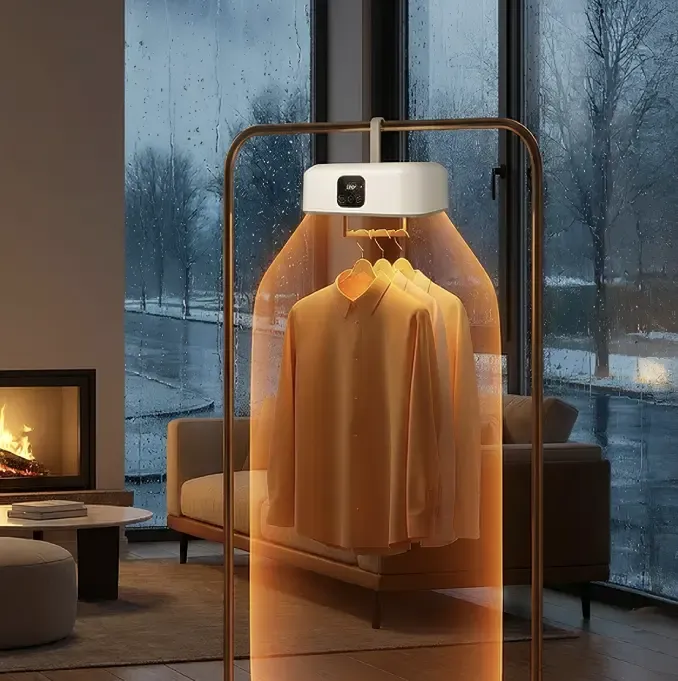
That is where the Qinux AirdrobeX fits: a slim drying closet where clothes hang inside a fabric cover while the unit on top circulates warm air around every piece. No venting, no installation, no drum, and it plugs into a regular outlet.

A simple laundry plan for the weeks without a dryer
- Wash smaller loads more often — two small drying sessions are much easier than one mountain of wet clothes.
- Save bulky items for one laundromat trip — sheets, towels and comforters in a single visit.
- Hang everyday clothes the same day — ideally in a warm-air drying closet so they are ready by the evening.
- Keep the room ventilated — a cracked window or a fan keeps condensation off the glass.
- Plan around the repair date — ask the technician for an estimated timeframe so you know whether you are covering days or weeks.
Our recommendation: Qinux AirdrobeX
When the dryer breaks, you need something that works tonight, in the space you have, without installation. The Qinux AirdrobeX is the solution we recommend: it keeps everyday laundry drying at home while you wait for a repair, and for many apartments it is the smarter long-term choice instead of buying a new tumble dryer.
- 360° warm air — the unit on top circulates warm air around every hanging garment, both sides at once.
- Antibacterial UV light — according to the maker, it helps eliminate bacteria, dust mites and bad odors, so slow-drying loads do not turn musty.
- 600W with a programmable timer — low power draw from a standard outlet, and it runs only as long as you set it.
- No venting or installation — unpack it, hang your clothes, close the cover and press start.
- Gentle on fabrics — nothing tumbles, so the maker says it suits cotton, wool, polyester and delicates.
- Remote control and quiet operation — easy to run in a bedroom, hallway or living room, and it packs away when you are done.
Owners rate it 4.8/5 from 1,289 reviews on the official site, and 94% would recommend it. One unit is $109 at the 50% launch discount, and multi-packs bring the price down to $72 per unit. Shipping is free and every order has a 14-day money-back guarantee. It is sold only through the official website.
Want the details first? Our full AirdrobeX review covers setup, everyday performance and what comes in the box, and you can compare it with other options in portable dryer vs. tumble dryer vs. drying rack. Always follow the manufacturer’s instructions and the care label on each garment.
Frequently asked questions
What should I do first when my dryer stops working?
Check the simple things before you call anyone: is it plugged in, is the breaker or fuse fine, does the door close and click, and are the lint filter and vent clear? A clogged vent or full lint trap is a very common reason a dryer runs but does not dry well. If the basics are fine, unplug it and call a technician; do not keep running a dryer that smells hot or burnt.
How can I dry clothes fast without a dryer?
Run an extra spin cycle, shake each piece and hang it on its own hanger with space around it, then keep air moving with a fan and an open window or a dehumidifier. Small items dry in hours; jeans and towels take longest. A portable warm-air dryer like the Qinux AirdrobeX speeds this up because it circulates warm air around hanging clothes inside its own cover.
Is it OK to leave wet clothes in the washer until the dryer is fixed?
No. Wet laundry left in a closed drum for many hours starts to smell musty and can develop mildew. Hang it up as soon as the wash ends, even if it is just over chairs and doors for the first night.
Should I repair or replace a broken dryer?
It depends on the age of the machine, the repair quote and how much you really use it. Many people in apartments and small homes use the breakdown as a chance to ask whether they need a big tumble dryer at all; a compact portable dryer covers most everyday loads with far less power and space.
Can a portable clothes dryer replace a regular dryer?
For many households, yes for everyday clothes: shirts, tops, jeans, workwear, gym clothes and delicates on hangers. Very bulky items such as duvets are usually easier at a laundromat. The AirdrobeX runs on 600W and dries several garments per cycle; the maker does not publish a maximum load.
How long does it take to dry clothes indoors without a dryer?
On a rack in a still room, a full load can take most of a day and heavy cotton even longer, especially in cold, humid weather. Spacing, airflow and gentle warmth cut that time a lot, and a warm-air drying closet is the fastest home option short of a tumble dryer.