The quick answer
A full-size electric tumble dryer typically draws a few thousand watts while it runs (commonly around 3,000–5,000W), which makes it one of the most power-hungry appliances in a home. A portable warm-air dryer like the Qinux AirdrobeX runs on 600W — a fraction of that — and plugs into a normal outlet. To know your real cost, multiply watts × hours ÷ 1,000 × your price per kWh.
If your electricity bill jumps every winter, the clothes dryer is one of the first places to look. It is easy to forget that a dryer is essentially a big heater with a fan and a drum, and heating air takes a lot of energy. The good news: once you know how to read the numbers, it takes about one minute to work out what each load really costs — and to see where you can save.
How many watts does a clothes dryer use?
It depends on the type of dryer. Here is the general picture, with the exact number always printed on your appliance’s rating label (usually inside the door or on the back):
| Dryer type | Typical power draw | Needs installation? |
|---|---|---|
| Full-size electric tumble dryer | A few thousand watts (commonly ~3,000–5,000W) | Dedicated outlet + vent |
| Gas tumble dryer | Less electricity, but burns gas for heat | Gas line + vent |
| Portable warm-air dryer (AirdrobeX) | 600W | None — regular outlet |
| Drying rack | 0W | None |
The reason tumble dryers draw so much is the heating element: it has to heat a large volume of air very quickly while a motor turns a heavy drum full of wet laundry. A warm-air drying closet works differently — clothes hang still while a compact unit circulates gentle warm air around them, so it does not need anything close to that much power.
How to calculate the cost per load (in one minute)
Grab your latest electricity bill and find the price per kilowatt-hour (kWh). Then use this simple formula:
- Find the wattageCheck the rating label on the appliance. Example: 4,000W for a tumble dryer, 600W for the AirdrobeX.
- Multiply by the hours it runsA one-hour cycle at 4,000W = 4,000 watt-hours.
- Divide by 1,000 to get kWh4,000 watt-hours = 4 kWh.
- Multiply by your price per kWhAt an example rate of $0.15 per kWh, 4 kWh costs about $0.60 for that hour.
Run the same math for a 600W appliance and one hour of use comes to 0.6 kWh — about 9 cents at that same example rate. Your own number will depend on your local electricity price and how long your loads take, so treat these as worked examples, not promises. To get your real numbers, keep a simple laundry log of drying times and energy use for a couple of weeks.
What makes a dryer use more (or less) power
- How wet the clothes are going in — a fast final spin in the washer removes water for free, so the dryer has less work to do.
- Overloading — a stuffed drum or a crowded rack slows airflow and stretches every cycle.
- Heavy items mixed with light ones — towels and jeans keep the whole load running longer. Dry them separately.
- A clogged lint filter or vent — on a tumble dryer, poor airflow means longer cycles and wasted energy. Clean the filter every load.
- Running a cycle longer than needed — use a timer instead of guessing, so the machine stops when the clothes are done.
Five easy ways to cut your drying costs
- Spin harder in the washerThe highest spin your fabrics allow is the cheapest drying you will ever do.
- Dry full, but not crowded, loadsFewer, well-spaced loads beat many tiny ones or one packed load.
- Hang what can hangShirts, blouses and dresses dry well on hangers, with fewer wrinkles and less ironing.
- Use a timerSet it and forget it, so nothing runs longer than it has to.
- Switch everyday drying to a low-wattage optionFor apartments and small homes, a portable warm-air dryer handles daily laundry on a fraction of the power (weighing a heated airer instead? See our heated drying rack vs. portable clothes dryer guide).
The low-wattage option: a portable warm-air dryer
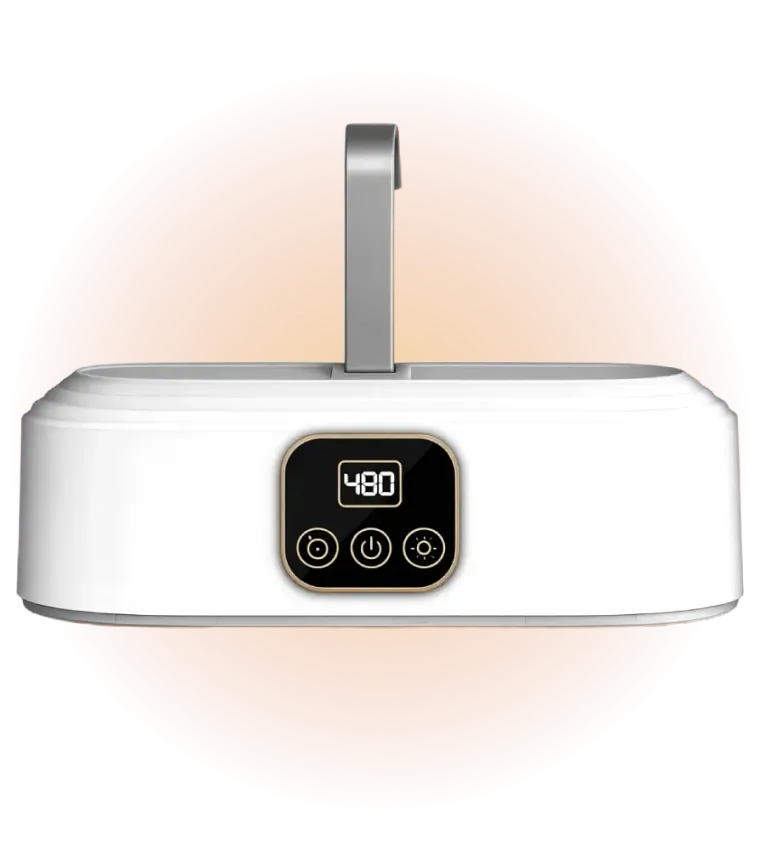
This is where the Qinux AirdrobeX makes a lot of sense. It is a compact drying closet: you hang your clothes inside its cover and the unit on top circulates 360° warm air around every garment, while an antibacterial UV light helps eliminate bacteria, dust mites and odors, according to the maker. It is rated at just 600W, plugs into a regular outlet, needs no venting, and comes with a remote control and programmable timer so it only runs as long as you want. Because clothes hang instead of tumbling, it is also gentle on delicates and wool.
Owners rate it 4.8/5 on the official site. As Peter put it: “It’s like having a mini dryer without taking up space.” If you want the full picture first, our AirdrobeX review covers real-world performance, and our portable dryer vs. tumble dryer vs. drying rack comparison looks at speed, space and fabric care side by side.

Which option is right for you?
- Large family, lots of towels and bedding every day — a full-size tumble dryer still has its place, if you have the hookup.
- Apartment, renter or no laundry room — a 600W portable warm-air dryer is the practical, lower-power choice.
- Want zero running cost and have time and space — a drying rack works, as long as the room is well ventilated (see our tips to dry clothes indoors fast).
Whatever you choose, always follow the manufacturer’s instructions and the care label on each garment.
Our recommendation: Qinux AirdrobeX
If your goal is to stop paying for thousands of watts every time you dry a few shirts, the Qinux AirdrobeX is the option we recommend. It was built to dry everyday laundry on a small, predictable power budget: 600W, a regular household outlet and no venting. Run the formula above on your own bill and you will see why it makes sense for daily loads in an apartment or small home.
- Runs only as long as you need — the programmable timer stops it exactly when you choose, so it never runs longer than needed.
- Warm air goes to the clothes — 360° circulation inside the cover, instead of heating a drum or the whole room.
- Fresh results — the antibacterial UV light, according to the maker, helps eliminate bacteria, dust mites and odors.
- Easy on fabrics — clothes hang still, so delicates and knits keep their shape.
Owners rate it 4.8/5 on the official site. It starts at $72 per unit on the 5-pack ($109 for a single unit at the 50% launch discount), with free shipping and a 14-day money-back guarantee.
Frequently asked questions
How many watts does a clothes dryer use?
A full-size electric tumble dryer usually draws a few thousand watts while it runs — commonly somewhere around 3,000 to 5,000 watts, depending on the model. The exact figure is printed on the rating label, usually inside the door. A portable warm-air dryer like the Qinux AirdrobeX is rated at 600W.
How do I calculate how much a dryer costs per load?
Multiply the wattage by the hours it runs, divide by 1,000 to get kilowatt-hours (kWh), then multiply by the price per kWh on your electricity bill. For example, a 4,000W dryer running for one hour at $0.15 per kWh costs about $0.60.
How much does it cost to run a 600W portable dryer?
A 600W appliance uses 0.6 kWh per hour of use. At an example rate of $0.15 per kWh, that is about 9 cents per hour. Check the rate on your own bill, because electricity prices vary a lot from state to state.
Is it cheaper to hang clothes to dry?
Air drying on a rack costs nothing in electricity, but indoors it can take a day or more, takes over a room and can leave clothes smelling musty in damp weather. A low-wattage portable dryer is the middle ground: much faster than a rack, at a fraction of the power of a tumble dryer.
Does a portable dryer need a special outlet?
A 600W unit like the AirdrobeX plugs into a regular household outlet and needs no venting or installation. Full-size electric tumble dryers in the US typically need a dedicated high-voltage outlet. Always follow the manufacturer’s instructions.