
The quick answer
If your portable clothes dryer leaves clothes damp or takes forever, the cause is almost always how the load goes in: too much water from a short spin, hangers packed too tight, heavy and light items mixed, or the cover left open. Correct those habits and a warm-air dryer like the Qinux AirdrobeX does exactly what it is built to do: dry hanging clothes evenly, gently and fast.
A portable clothes dryer is one of the simplest appliances in the house: warm air in, moisture out. That simplicity is also why small habits make such a big difference. Two people can own the same dryer and get completely different results, one pulling out warm, soft shirts and the other fighting with damp collars and stiff jeans. The good news is that almost every problem traces back to a handful of easy-to-fix mistakes. Here is what most people get wrong, why it matters and what to do instead.
Mistake 1: Skipping the extra spin
What happens: clothes go into the cover dripping or heavy with water, and the cycle ends before all of it has evaporated.
Why it matters: the washer’s spin cycle removes water mechanically, which is far quicker and cheaper than evaporating it. Every bit of water left in the fabric is work the warm air has to do.
The fix: use the highest spin speed the care label allows, and give towels, jeans and hoodies an extra spin before hanging. It is the single biggest time saver.
Mistake 2: Packing the hangers too tight
What happens: the outer pieces dry nicely, the ones in the middle stay cool and damp.
Why it matters: garments pressed together trap a pocket of humid air between them. Warm air flows around the bundle instead of through it.
The fix: leave a small gap between hangers, about a finger’s width or more. If the load is big, split it into two shorter cycles; it is usually faster overall than one overloaded cycle.
Mistake 3: Mixing heavy and light items in one cycle
What happens: the T-shirts are dry in no time, but you keep running the dryer for one pair of jeans, and the thin items end up over-dried.
Why it matters: thick fabrics like denim, fleece and terry cloth hold far more water than polyester or thin cotton, so they set the pace of the whole load.
The fix: sort by weight. Dry towels and jeans together, light tops together. If you must mix, hang the heavy items on the outside and take the light ones out early.
Mistake 4: Leaving the cover open
What happens: drying feels slow and the room gets warm instead of the clothes.
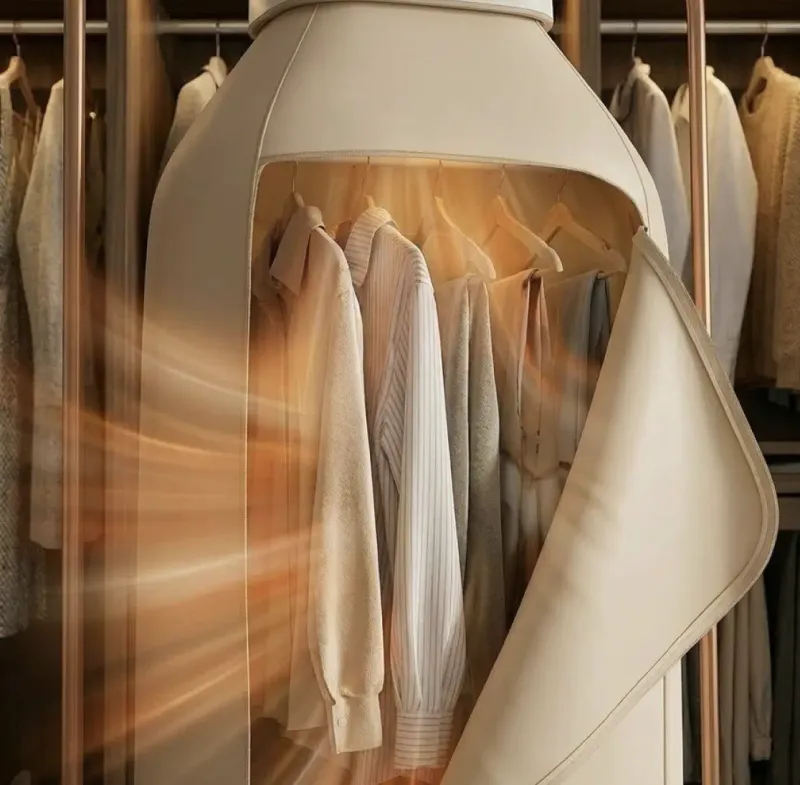
Why it matters: the cover is what keeps the warm air circulating around your clothes. Open it and the heat drifts into the room. We explain the physics in how a portable clothes dryer works.
The fix: close the cover fully before you start the timer, and avoid opening it every few minutes to check.
Mistake 5: Running it in a sealed, humid room
What happens: the first cycle is fine, the second is slower, and the windows fog up.
Why it matters: the water leaving your clothes goes into the room as vapor. In a small closed room, humidity climbs and the air can no longer take moisture away as easily.
The fix: give the room a little airflow: crack a window, leave the door open or run the dryer in a larger space. If your home is humid in general, our guide on drying clothes with a dehumidifier shows how the two work together.
Mistake 6: Hanging clothes folded or bunched
What happens: hoods, pockets, waistbands and collars stay damp after everything else is dry.
Why it matters: double layers and thick seams are where water hides, and folded fabric shields itself from the airflow.
The fix: shake every piece before hanging, pull hoods out, unbutton shirts, and turn jeans and hoodies inside out so pockets and seams face the warm air. Flip heavy items halfway through if needed.
Mistake 7: Guessing the timer
What happens: one load comes out damp, the next comes out bone dry and slightly stiff.
Why it matters: a load of gym tops and a load of towels are completely different jobs. The maker does not publish fixed drying times for the AirdrobeX for exactly this reason.
The fix: learn your loads. Note how long a typical load of light clothes needs and how long towels need, and set the programmable timer to match. A short top-up cycle beats over-drying everything.
Mistake 8: Leaving clothes inside after the cycle ends
What happens: clothes that were dry feel cool and slightly damp hours later, and wrinkles have set.
Why it matters: warm fabric releases wrinkles easily; as it cools in a closed space, creases lock in and any leftover humidity settles back on the fibers.
The fix: take clothes out while they are still warm, fold or hang them right away, and leave the cover open for a few minutes to air out. The same rule applies to the washer: leaving wet laundry in the drum is the main cause of that sour, musty smell in clothes.
Quick diagnosis: symptom, likely mistake, fix
| What you notice | Most likely cause | What to do |
|---|---|---|
| Middle of the load still damp | Hangers packed too tight | Space the hangers or split the load |
| Everything slow, every time | Short spin or cover left open | Extra spin, close the cover fully |
| Jeans damp, shirts over-dry | Mixed heavy and light items | Sort by weight, separate cycles |
| Pockets, hoods and seams damp | Clothes bunched or folded | Shake out, turn inside out, flip |
| Slower on the second cycle | Humid, sealed room | Open a window or door |
| Wrinkled or cool and clammy later | Left inside after the timer | Unload while warm |
None of these fixes cost anything, and most take less than a minute. Once they become habit, a portable dryer turns into the easiest part of laundry day.
Our recommendation: Qinux AirdrobeX
If you are drying clothes indoors and want them to come out dry, soft and fresh every time, the Qinux AirdrobeX is the portable dryer we recommend. It is built around the exact things this guide is about: warm air, steady airflow and a closed cover that keeps the heat on your clothes, not in the room. Pair it with the habits above and it is the most practical way to dry laundry in an apartment, a small house or through a wet winter.
- 360° warm-air circulation — heated air flows around every hanging garment, both sides at once.
- Antibacterial UV light — according to the maker, it helps eliminate bacteria, dust mites and bad odors while clothes dry.
- Programmable timer, touch panel and remote — set the right time for each load and it switches off by itself.
- 600W from a regular outlet — low energy use, no vent, no installation.
- Gentle on fabrics — nothing tumbles, so cotton, wool, polyester and delicates hang still while they dry.
- Compact — stands in a corner while it works and stores away afterwards.
Owners rate it 4.8/5 from 1,289 reviews on the official site, and 94% would recommend it. One unit is $109 at the 50% launch discount, and multi-packs bring it down to $72 per unit, with free shipping and a 14-day money-back guarantee. It is sold only through the official website.
Want to see it in action first? Read our full AirdrobeX review or check the current packages on the AirdrobeX home page. Always follow the manufacturer’s instructions and the care label on each garment.
Frequently asked questions
Why are my clothes still damp after a portable dryer cycle?
Most of the time it comes down to the load, not the dryer: clothes that went in too wet (a short spin), too many pieces pressed together, heavy and light items mixed in one cycle, or a cover left open so the warm air escapes. Fix those and drying time drops noticeably.
How full should I load a portable clothes dryer?
Leave a little space between hangers so warm air can pass between garments. If pieces touch along their whole length, the middle of the load stays damp. The maker of the AirdrobeX does not publish a maximum load, so use spacing as your guide and split very big loads into two cycles.
Should I put towels and jeans in with lighter clothes?
It works better to dry them separately. Thick items hold much more water and set the pace for the whole cycle, so either dry them in their own cycle or hang them on the outside where the airflow is strongest.
Does the room matter when using a portable dryer?
Yes. The moisture that leaves your clothes goes into the room as vapor. A cracked window or an open door lets it escape; a small sealed room with no airflow slows drying down.
Can I leave clothes in the portable dryer after the timer ends?
It is best to take them out while they are still warm. Clothes left hanging in a cooling, closed cover can feel slightly damp again and wrinkles set in as they cool.