The quick answer
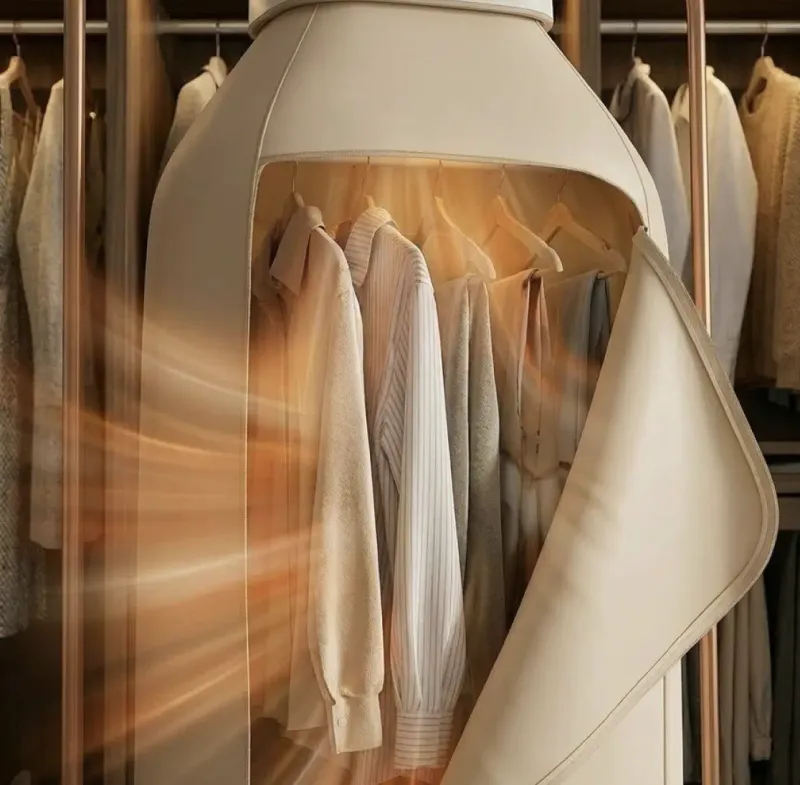
A hanging-style portable clothes dryer works by heating air and blowing it around clothes that hang inside a closed fabric cover. Warm air holds more moisture and moving air carries it away, so water leaves the fabric far faster than on a rack. Models like the Qinux AirdrobeX add a UV light for freshness and a timer so they switch off by themselves. Just unboxed one? Here is how to use a portable clothes dryer on your first day.
Most people picture a dryer as a big hot drum that spins. A portable clothes dryer looks nothing like that: it is a slim frame with a fabric cover and a small unit on top. So how does it get a load of wet shirts dry without tumbling, venting or any installation? The answer is simple physics that you already see on a breezy, sunny washing day. Once you understand it, you will also know how to get the fastest, freshest results from any portable dryer. (For the bigger picture, from running cost to safety and fabric care, see our complete portable clothes dryer guide.)
Why wet clothes dry at all: the three things that matter
Drying is just evaporation: water in the fibers turns into vapor and leaves. Three factors decide how fast that happens, and every drying method, from a clothesline to a commercial dryer, is really a way of controlling them.
| Factor | What it does | On a rack indoors | In a warm-air drying closet |
|---|---|---|---|
| Warmth | Warm water evaporates faster, and warm air can hold more moisture | Room temperature, often cool in winter | Heated air from the unit on top |
| Airflow | Moving air replaces the damp layer around the fabric with drier air | Mostly still air unless you add a fan | Fan-driven 360° circulation |
| Humidity | Dry air absorbs water easily; damp air slows drying down | Rises as the load dries in a closed room | Moist air keeps moving out of the cover |
That is why the same T-shirt can dry in an hour on a warm, breezy day and take a whole day on a rack in a cold bedroom in November. Nothing changed about the shirt; the air around it did.
What happens inside a portable clothes dryer, step by step
A hanging-style portable dryer simply puts all three factors in your favor at once, inside a small enclosed space:
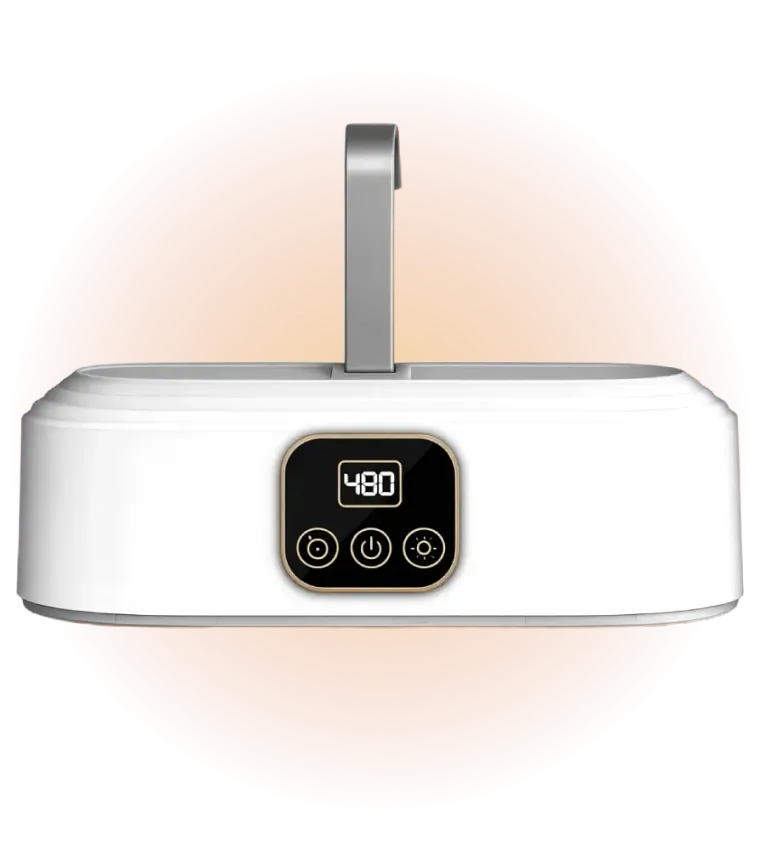
- The heating element warms the airA compact heater in the unit on top raises the air temperature. On the AirdrobeX, the whole unit is rated at 600W, so it heats gently instead of blasting like a tumble dryer.
- A fan pushes that warm air downThe fan sends warm air into the cover so it flows over and between every hanging garment. This is what the maker calls 360° hot air circulation.
- The cover keeps the warm air where it worksWithout the cover, warm air would drift into the room. The fabric enclosure keeps it around the clothes, so both sides of each piece dry together.
- Moisture leaves as vaporAs the water evaporates, the damp air keeps moving and escapes through the cover, replaced by fresh warm air. That steady exchange is what makes drying fast.
- The UV light works in the backgroundAccording to the maker, the antibacterial UV light helps eliminate bacteria, dust mites and odors while the cycle runs.
- The timer ends the cycleYou set the time on the touch panel or remote, and the dryer switches itself off. No tumbling, no lint trap to forget, no hot drum.
Portable dryer vs. tumble dryer: same goal, different mechanism
A tumble dryer also uses heat and airflow, but it adds motion: the drum lifts and drops clothes so hot air reaches them. That motion is fast, but it is also where most fabric wear comes from: the friction, stretching and high heat that can shrink cotton and pill knits (more on that in how to keep clothes from shrinking in the dryer). A tumble dryer also needs a big footprint, usually a vent and a lot of power per load.
A hanging dryer swaps motion for space: clothes hang still, separated on hangers, and the air does the moving. That is why it is gentle on fabrics, needs no installation and runs on far less power. We compare the two in detail in portable dryer vs. tumble dryer vs. drying rack.
What decides how long drying takes
Because the dryer controls warmth and airflow, the rest is up to the load. These are the variables that change your drying time:
- How well the clothes were spun — every bit of water the washer removes is water the dryer does not have to evaporate. Use the highest spin the care label allows.
- Fabric type and thickness — polyester and thin cotton dry fastest; denim, fleece and terry towels hold far more water.
- Spacing — clothes pressed together trap a pocket of damp air. Leave a little room between hangers so the warm air can pass.
- How full the cover is — an overloaded closet behaves like an overloaded rack: the outer pieces dry and the middle stays damp.
- The room — a dryer in a room with a little ventilation keeps pushing moisture out easily; a sealed, humid room slows things down.
The maker does not publish fixed drying times or a maximum load for the AirdrobeX, and that makes sense: a load of gym tops and a load of jeans are completely different jobs. The timer lets you match the cycle to what you hang.
How to get the best results (now that you know how it works)
- Extra spin firstLess water in means a shorter cycle and lower power use.
- Shake and hang every pieceOpening the fibers lets warm air reach the whole surface and reduces wrinkles.
- Heavy items on the outside, light ones in the middleOr simply dry towels and jeans in their own cycle.
- Close the coverAn open cover lets the warm air escape and slows everything down.
- Give the room a little airflowA cracked window or open door helps the moist air leave the room, especially in winter.
- Take clothes out when the timer endsFold or put them away dry and warm; wrinkles drop out best while they are still warm.
If you are still drying on a rack for now, the same principles apply. Our guide on how to dry clothes indoors fast shows how to recreate warmth, airflow and low humidity with what you already have.
Our recommendation: Qinux AirdrobeX
Once you see that fast drying is just warmth plus moving air plus somewhere for the moisture to go, the case for a warm-air drying closet is obvious. The Qinux AirdrobeX is the portable dryer we recommend, because it is built exactly around that mechanism and adds the extras that make it easy to live with:
- 360° warm-air circulation — heated air surrounds every hanging garment, both sides at once, so clothes come out dry and soft.
- Antibacterial UV light — according to the maker, it helps eliminate bacteria, dust mites and bad odors, so even slow loads stay fresh.
- 600W from a standard outlet — low energy use, no vent, no installation.
- Touch panel, remote control and programmable timer — set it, walk away and it switches off by itself.
- Gentle and quiet — nothing tumbles, it suits cotton, wool, polyester and delicates, and it is comfortable to run in a bedroom.
- Compact and easy to store — it stands in a corner while it works and packs away afterwards.
Owners rate it 4.8/5 from 1,289 reviews on the official site, and 94% would recommend it. One unit is $109 at the 50% launch discount, and multi-packs bring it down to $72 per unit, with free shipping and a 14-day money-back guarantee. It is sold only through the official website.
Want to see it in everyday use first? Our full AirdrobeX review covers setup, performance and what comes in the box, and the AirdrobeX home page shows current package prices. Always follow the manufacturer’s instructions and the care label on each garment.
Frequently asked questions
How does a portable clothes dryer dry clothes without a drum?
A hanging-style portable dryer, sometimes called a drying closet, heats air with a small heating element and uses a fan to push it down and around clothes hanging inside a fabric cover. Warm, moving air makes the water in the fabric evaporate faster and carries the moisture away, so nothing needs to tumble.
Do portable clothes dryers need to be vented?
Hanging-style warm-air dryers like the Qinux AirdrobeX do not need a vent hose or installation; they plug into a regular outlet. The moisture leaves the clothes as water vapor, so it is a good idea to use the dryer in a room with some airflow, such as a cracked window or an open door.
How long does a portable clothes dryer take to dry clothes?
It depends on the fabric, how well the clothes were spun and how full the cover is. Thin shirts and synthetics dry fastest; jeans, hoodies and towels take longest. The AirdrobeX has a programmable timer, so you set the cycle and it switches off by itself. The maker does not publish fixed drying times, so check the manual for guidance.
What does the UV light in a clothes dryer do?
Ultraviolet light is widely used for sanitizing surfaces. In the AirdrobeX, the maker says the antibacterial UV light helps eliminate bacteria, dust mites and bad odors while the clothes dry, which is useful for laundry that would otherwise dry slowly and turn musty.
Does a portable dryer use a lot of electricity?
Much less than a full-size tumble dryer. The AirdrobeX is rated at 600W, which is a fraction of what a typical electric tumble dryer draws, and the timer means it only runs for as long as you set it.
Is a portable dryer gentle on clothes?
Yes. Because clothes hang still instead of tumbling against a hot drum, there is less friction and stretching. The maker says the AirdrobeX suits cotton, wool, polyester and delicate garments; always follow the care label on each item.