The quick answer
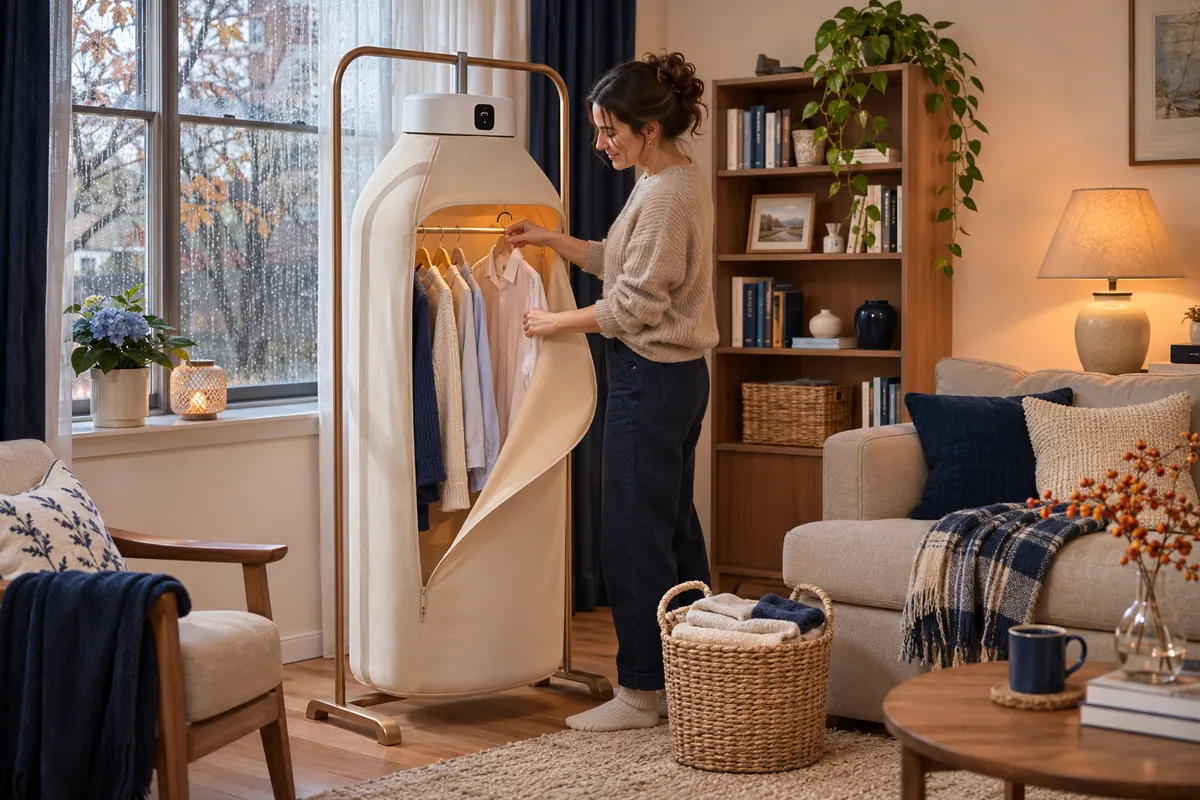
A portable clothes dryer is a compact dryer that plugs into a regular outlet and needs no vent or hookup, so it works in apartments, dorms and homes without a laundry room. The most practical type for everyday clothes is a warm-air drying closet: shirts hang inside a cover while warm air circulates around them. This guide maps the whole subject in eight short sections and points you to the in-depth article for each one.
People usually start searching for a portable clothes dryer for one of three reasons: they rent a place with no laundry hookups, they are tired of racks that leave clothes damp for two days, or their full-size dryer just broke. Whatever brought you here, the questions that follow are the same: which type, how much power, where to put it, what it can dry and what to do when something does not go to plan. We have written a separate, detailed article for each of those questions. This page is the map that connects them.
1. The types of portable dryer and how they work
Every dryer relies on the same three things: warmth, moving air and somewhere for the moisture to go. A compact tumble dryer spins clothes in a small drum; a heated drying rack warms the rails the clothes lie on; a warm-air drying closet hangs clothes inside a cover and blows warm air around all sides. Our explainer on how a portable clothes dryer works walks through what happens inside, and the heated drying rack vs. portable clothes dryer comparison shows where each type wins.
| Type | How it dries | Best for |
|---|---|---|
| Compact tumble dryer | Small heated drum that spins the load | Small loads of sturdy cotton, where there is counter or floor space for a drum |
| Heated drying rack | Warm rails under clothes laid over them | A few light items, slow and steady drying |
| Warm-air drying closet | Clothes hang inside a cover; warm air circulates around them | Shirts, sweaters, jeans and towels on hangers, wrinkle-friendly and gentle |
2. Is a portable dryer worth it for you?
It depends on your space and routine more than on the gadget. Renters, students, small households and anyone in a rainy or cold climate get the most out of one. For the honest pros and cons, read are portable clothes dryers worth it? 7 skeptical questions, and for a side-by-side table with full-size machines and racks, see portable clothes dryer vs. tumble dryer vs. drying rack. If your setup has no hookups at all, the no-hookup apartment shopping list covers the washer side too, and students will find a ready routine in how to dry clothes in a dorm room.
3. What it costs to run
Running cost is simple arithmetic: watts × hours ÷ 1,000 = kWh, then kWh × your rate. Full-size electric tumble dryers draw several thousand watts while they heat, whereas a warm-air drying closet such as the Qinux AirdrobeX is rated at 600W. Our guide to how much electricity a clothes dryer uses shows the cost per load side by side, and the best time to do laundry explains how off-peak hours can trim the bill further.
| Hours of drying | Energy at 600W | Cost at 15¢/kWh | Cost at 25¢/kWh |
|---|---|---|---|
| 1 hour | 0.6 kWh | about 9¢ | about 15¢ |
| 2 hours | 1.2 kWh | about 18¢ | about 30¢ |
| 3 hours | 1.8 kWh | about 27¢ | about 45¢ |
Use the rate printed on your own bill; the two rates above are only examples.
4. Setting it up and using it
Placement matters more than people expect: a spot with a little floor space, an outlet within reach and some ventilation works best. Our step-by-step for the first day and first week with a portable clothes dryer covers hanging the first load, choosing a timer setting and storing the unit. If you like to fine-tune, the simple laundry log helps you learn the right timer for each type of load in a couple of weeks.
5. What to dry in it, fabric by fabric
Hanging clothes in warm, moving air is gentle because nothing tumbles or rubs. Still, the care label is the rule. Our if-then guide for every item in your laundry basket tells you whether to hang, lay flat or use warm air; laundry drying symbols explained decodes the label itself; and how to keep clothes from shrinking covers cotton, wool and knits.
6. Freshness, smells and the UV lamp
Clothes that dry slowly in a closed, humid room are the ones that smell musty, so speed and airflow are the real cure. Read how to get rid of the musty smell in clothes for the full routine, and does UV light kill bacteria on clothes? for what a UV lamp inside a drying closet does and does not do, including what the FDA says about UV-C.
7. Safety rules worth knowing
Any heating appliance deserves a few habits: plug it straight into a wall outlet, keep the area around it clear, use the timer and follow the manual. Our article on whether it is safe to leave a dryer running overnight explains where dryer fire risk really comes from, and if you also own a vented tumble dryer, how often to clean your dryer vent lists the official rules.
8. When clothes stay damp: quick fixes
Damp results almost always trace back to a short spin, packed hangers, an open cover or a humid room. The 8 portable dryer mistakes article has a symptom table, and why clothes take so long to dry indoors separates what you can change from what you cannot. For winter ideas from countries that dry indoors every year, see what Japan, Sweden and the UK do, and if your big dryer has just stopped working, start with dryer broke? how to dry clothes while you wait.
Our recommendation: Qinux AirdrobeX
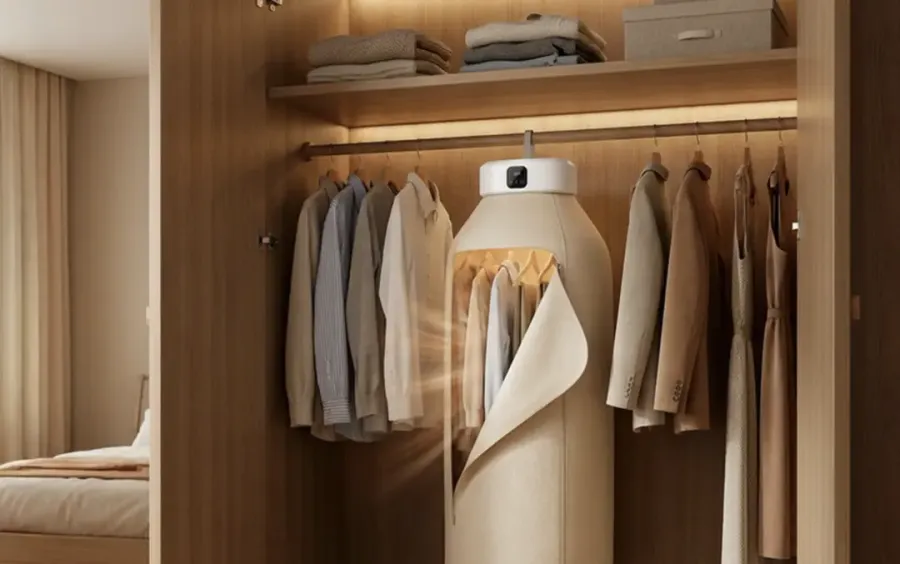
Read this guide from top to bottom and a pattern appears: the portable dryer that solves the most problems at once is a warm-air drying closet, and the one we recommend is the Qinux AirdrobeX. It brings together everything the sections above point to: 360° warm air around hanging clothes, a cover that keeps the heat where it works, a timer, a UV lamp and a 600W rating that keeps running costs low. It is the most practical way to get dry, fresh laundry in an apartment without hookups, renovations or a vent.
- 360° warm-air circulation — dries both sides of shirts, sweaters, jeans and towels on their hangers.
- UV light — according to the maker, it helps eliminate bacteria, dust mites and odors while clothes dry.
- 600W from a regular outlet — about 9¢ an hour at 15¢ per kWh, with no installation.
- Touch panel, remote and timer — set it and it switches itself off.
- Folds away — compact to store when laundry day is done.
One unit is $109 at the 50% launch discount (two units $190, three $240), with free shipping, a 4.8/5 rating from 1,289 buyers and a 14-day money-back guarantee. It is sold only through the official website. For the full breakdown, read our Qinux AirdrobeX review or see the packages on the home page.
Before you buy any dryer, our guide on how to check portable dryer claims yourself gives you a 6-question checklist. Always follow the care label on each garment and the manufacturer’s instructions.
Frequently asked questions
What is a portable clothes dryer?
It is any compact dryer that does not need the 240V outlet, gas line or wall vent of a full-size tumble dryer. The main types are compact mini tumble dryers, heated drying racks and warm-air drying closets, where clothes hang on hangers inside a fabric cover while a unit on top blows warm air around them.
How much does it cost to run a portable clothes dryer?
Multiply the wattage by the hours of use and divide by 1,000 to get kWh, then multiply by the rate on your electric bill. A 600W drying closet such as the Qinux AirdrobeX uses 0.6 kWh per hour, which is about 9 cents an hour at 15 cents per kWh.
Do portable clothes dryers need a vent?
Warm-air drying closets and heated racks do not need a vent or any installation; they plug into a regular outlet. Because the moisture goes into the room, crack a window or run the bathroom fan while they work, just as you would when air-drying.
Can I put delicates and wool in a portable dryer?
Follow each care label first. Hanging dryers are gentler than tumbling because clothes do not spin or rub, which is why the maker says the AirdrobeX suits wool, cotton, polyester and delicate garments. Knits that stretch when wet are still safest laid flat.
Is a portable clothes dryer worth it in an apartment?
For renters without hookups, small homes, rainy climates and winter laundry, yes: it dries clothes faster than a rack, takes little space and plugs into a normal outlet. If you already have a full-size dryer and plenty of room, you may not need one.