The quick answer
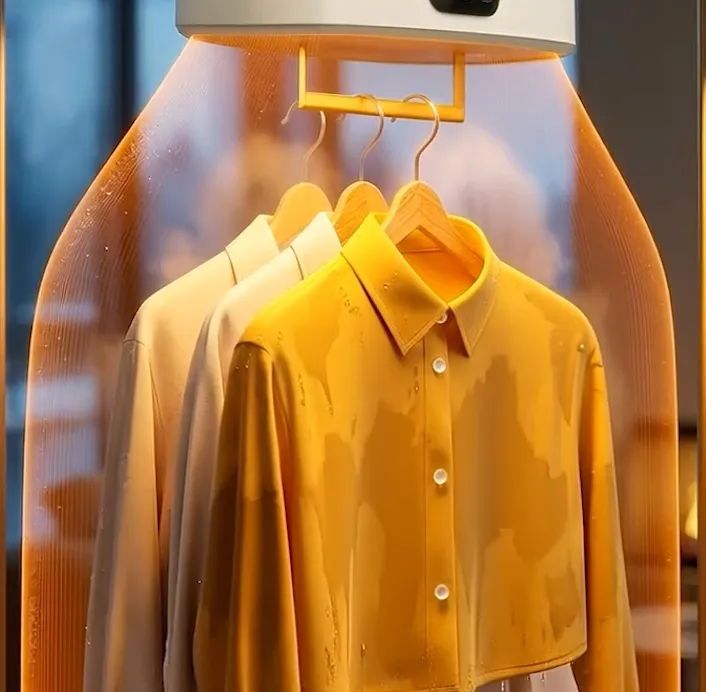
On a care label, the square is the drying symbol. A circle inside means tumble dry (dots show the heat), vertical lines mean hang to dry, a horizontal line means dry flat, and a diagonal line in the corner means dry in the shade. Most everyday clothes that should not go in a hot tumbling drum can still dry fast and gently on hangers with warm air, which is exactly what the Qinux AirdrobeX is built for.
You pull a new sweater out of the washer, look at the tag and find a row of tiny squares, circles and lines. Is that a “yes” to the dryer or a “never”? Care labels use a compact symbol language, and the drying part is the one that causes the most damage when it is misread: shrunken knits, stretched sweaters, faded jeans. Here are the 12 drying terms you will actually meet on labels, what each one means in plain English, and the easiest way to follow it at home, even without a tumble dryer.
How to read the drying symbol in 5 seconds
Every drying instruction starts with a square. What is inside the square tells you how to dry:
- A circle = a tumble dryer is involved.
- Dots inside the circle = how much heat.
- Vertical lines = hang it up.
- A horizontal line = lay it flat.
- A diagonal line in the top-left corner = keep it in the shade.
- A big X over the symbol = do not do this.
Labels in the US and in many other countries follow standardized care symbol systems, but brands do not always draw them identically. When the label also has words, the words win. Still unsure what to do with a specific item? Our if-then guide to drying every item in your laundry basket turns each symbol into a clear next step.
The 12 drying terms, explained
1. Tumble dry (normal)
Symbol: a square with an empty circle inside. Meaning: the item can go in a tumble dryer at any heat. Typical for cotton towels, sheets and sturdy everyday clothes.
2. Tumble dry low
Symbol: square and circle with one dot. Meaning: tumble drying is allowed, but only on low heat. You see it on T-shirts, activewear and many blends. Too much heat here is what causes most shrinking; our guide on how to keep clothes from shrinking in the dryer explains why.
3. Tumble dry medium
Symbol: square and circle with two dots. Meaning: medium heat is fine. Common on jeans, casual shirts and regular cotton.
4. Tumble dry high
Symbol: square and circle with three dots. Meaning: the item tolerates high heat, like heavy cotton towels and some bedding.
5. Tumble dry, no heat
Symbol: square and circle that is filled in (solid). Meaning: tumble on the air-only or no-heat setting. Used on items with foam, rubber or very heat-sensitive fibers.
6. Do not tumble dry
Symbol: square and circle crossed out with an X. Meaning: keep it out of the tumble dryer. This is one of the most common symbols on wool, knits, swimwear, lingerie, some synthetics and printed shirts. The reason is usually the combination of tumbling and drum heat, which can shrink, pill or deform the fabric.
7. Line dry
Symbol: a square with one vertical line (some labels show a curved line at the top, like a clothesline). Meaning: hang the item to dry after a normal spin, on a hanger or line.
8. Drip dry
Symbol: a square with vertical lines, usually two or three depending on the label system. Meaning: hang it while it is still dripping wet, without spinning or wringing. Used on shirts and blouses that crease badly, and on some delicate fabrics. Hang it where drips will not cause trouble.
9. Dry flat
Symbol: a square with one horizontal line in the middle. Meaning: lay the item flat to dry, on a towel or a flat mesh rack. Heavy wet knits stretch under their own weight when hung, so sweaters and wool items often carry this one.
10. Dry in the shade
Symbol: any drying symbol with a diagonal line in the top-left corner. Meaning: keep it out of direct sunlight, which can fade dark and bright colors and weaken some fibers.
11. Do not wring
Symbol: a twisted piece of fabric crossed out. Meaning: do not twist the item to squeeze out water. Press water out gently, or roll it in a towel, then follow the drying symbol.
12. Do not dry
Symbol: the plain square crossed out, often next to a dry-clean symbol. Meaning: the item is not meant to be washed and dried at home. Follow the dry-cleaning instruction instead.

Cheat sheet: symbol, meaning and the easy way to follow it
| On the label | What it means | Easy way to dry it indoors |
|---|---|---|
| Circle, one dot | Tumble dry low | Low-heat dryer, or hang and dry with gentle warm air |
| Circle, two or three dots | Medium or high heat OK | Any method; towels dry fastest with good airflow |
| Solid circle | Tumble, no heat | Air-only cycle or hang to dry |
| Circle crossed out | Do not tumble dry | Hang on a hanger; a warm-air drying closet speeds it up |
| One vertical line | Line dry | Hanger, rack or drying closet |
| Two or three vertical lines | Drip dry | Hang wet, no spin, over a surface that can get wet |
| Horizontal line | Dry flat | Flat on a towel or mesh rack |
| Diagonal line in corner | Dry in the shade | Indoors or away from direct sun |
Where most people go wrong with drying labels
The symbol people ignore most often is “do not tumble dry”, usually because the alternative feels slow: a sweater or a gym top hanging over a chair for a day, getting a little musty. In a small apartment, or in winter when nothing dries outside, that wait is the real problem. Clothes that dry too slowly indoors are the main source of that stale smell we cover in how to get rid of the musty smell in clothes.
That is why a hanging warm-air dryer such as the Qinux AirdrobeX fits so well into a label-friendly routine: clothes stay on their hangers, nothing tumbles, and warm air moves around every piece inside a closed cover, so “line dry” items finish much faster than on a chair or a cold rack.
A few simple habits make every symbol easier to follow:
- Check the label before the wash, not afterSort “do not tumble dry” and “dry flat” items into their own pile while loading the washer.
- Spin well unless it says drip dryThe washer’s spin removes water far faster than any air drying. Skip it only for drip-dry items.
- Hang with space between piecesAir needs to pass between garments. Packed hangers stay damp in the middle.
- Keep flat-dry knits flatLay heavy sweaters on a towel and reshape them gently. Hanging them wet can stretch the shoulders.
- When in doubt, go gentlerLower heat and hanging are almost always safer than high heat and tumbling.
Our recommendation: Qinux AirdrobeX
If a lot of your laundry says “do not tumble dry” or “line dry”, the Qinux AirdrobeX is the portable dryer we recommend. It lets you follow the label and still have dry clothes the same day: everything hangs, nothing tumbles, and warm air does the work inside a closed cover. It is the most practical way to dry hang-dry clothes indoors, in an apartment, a dorm or through a wet winter.
- 360° warm-air circulation — heated air flows around every hanging garment, both sides at once.
- No tumbling — cotton, wool blends, polyester and delicates hang still while they dry, so there is no drum friction.
- Antibacterial UV light — according to the maker, it helps eliminate bacteria, dust mites and bad odors while clothes dry.
- Programmable timer, touch panel and remote — set the time for each load and it switches off on its own.
- 600W from a regular outlet — no vent, no installation, low energy use.
- Compact — stands in a corner while it works and stores away afterwards.
Owners rate it 4.8/5 from 1,289 reviews on the official site, and 94% would recommend it. One unit is $109 at the 50% launch discount, and multi-packs bring it down to $72 per unit, with free shipping and a 14-day money-back guarantee. It is sold only through the official website.
Want the details first? Read our full AirdrobeX review, see the packages on the AirdrobeX home page, or learn how a portable clothes dryer works. Always follow the care label on each garment and the manufacturer’s instructions.
Frequently asked questions
What does a square with a circle inside mean on a clothing label?
It is the tumble dry symbol: the item can go in a tumble dryer. Dots inside the circle show the heat level (one dot low, two dots medium, three dots high). If the square and circle are crossed out, the item should not be tumble dried.
What is the difference between line dry and drip dry?
Line dry (a square with one vertical line) means you hang the item after a normal spin. Drip dry (usually shown with two or three vertical lines, depending on the label) means you hang it while it is still dripping wet, without spinning or wringing, so it does not crease or lose shape.
What does “dry flat” mean?
A square with one horizontal line means you lay the item flat on a towel or a flat rack to dry. It is used mostly for wool sweaters and heavy knits, which can stretch out of shape if hung while wet.
Can I put “do not tumble dry” clothes in a portable dryer?
Many items labeled “do not tumble dry” are labeled that way because of the tumbling and high heat of a drum dryer. A hanging, warm-air dryer like the AirdrobeX does not tumble, so it is a gentler option for many line-dry items. Always follow the label: anything marked dry flat or no heat should be dried exactly as the label says.
What does the diagonal line in the corner of a drying symbol mean?
A diagonal line in the top-left corner means dry in the shade: keep the item out of direct sunlight, which can fade dark and bright colors.
Why do some labels look different from others?
Care symbols follow international and US labeling systems, and some brands draw them slightly differently, especially the drip dry lines. If a symbol is unclear, follow any written words on the label, and when in doubt choose the gentler method.