The quick answer
Using a portable clothes dryer is simple: set it up near a wall outlet, hang well-spun clothes on hangers inside the cover with a little space between them, close the cover, set the timer and let the warm air do the work. On day one, start with a small, light load to learn how your fabrics behave, and by the end of the first week you will have a routine that takes a couple of minutes per load. That simplicity is exactly why we recommend the Qinux AirdrobeX.
The box has arrived, the laundry basket is full and you want dry clothes tonight. A hanging portable dryer is one of the easiest home appliances you will ever learn, but a few first-day habits make a big difference to how fast and how evenly it dries. This guide walks you through the unboxing, the first load and the first week, so the dryer becomes a normal part of your laundry day instead of a gadget in the corner. If you are curious about what happens inside the cover, read how a portable clothes dryer works first.
Before the first load: unbox and choose the spot
- Read the quick-start manualIt takes five minutes and covers the exact way your model’s frame, cover and unit fit together. Keep it somewhere you can find it again.
- Check everything is thereThe drying unit, the frame, the fabric cover and the remote. Look over the power cord before you plug anything in.
- Pick a flat, stable spot near an outletPlug straight into a regular wall outlet. Keep the dryer away from the bathtub, the sink and anything that could fall onto it.
- Give it breathing roomThe moisture that leaves your clothes has to go somewhere. A room with an open door or a slightly open window keeps the air from turning humid.
- Set up the frame and coverFollow the manual, place the unit on top and check that the cover closes fully. A closed cover is what keeps the warm air circulating around the clothes.
Your first load, step by step
Treat the first load as a test drive. You are not trying to dry the whole week’s laundry; you are learning how long your own clothes need.
- Spin well in the washerClothes should be damp, not dripping. The washer’s spin removes water faster than any dryer can.
- Choose light items firstT-shirts, shirts, leggings and synthetic workout wear are ideal for a first run. Save jeans, hoodies and towels for later.
- Shake each piece and hang it on its own hangerA quick snap opens the fibers and cuts wrinkles. One garment per hanger, buttons and zips done up.
- Leave a little space between garmentsWarm air needs a path. Spread the hangers along the rail instead of bunching them together.
- Close the cover all the wayAn open flap lets the warm air escape and slows everything down.
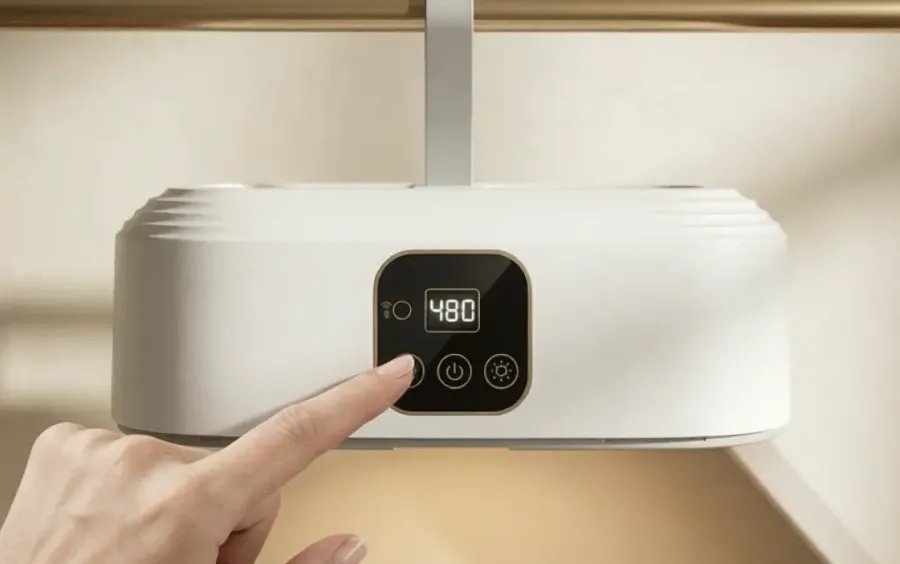
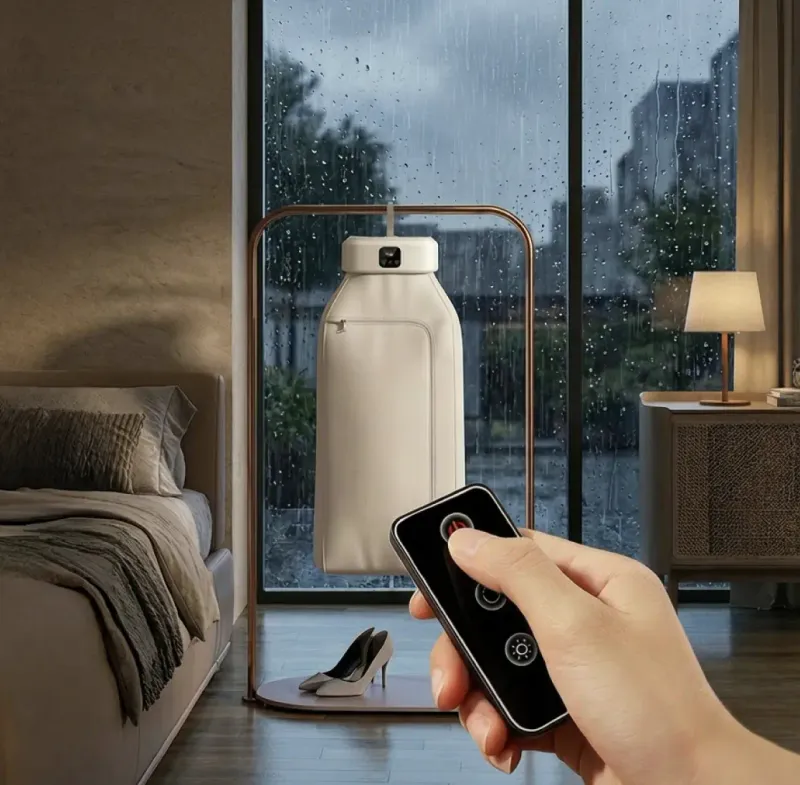
- Set the timer and switch on the UV lightUse the touch panel on top or the remote. According to the maker, the antibacterial UV light helps eliminate bacteria, dust mites and odors while the clothes dry.
- Check at the end of the cycleFeel the thickest parts: collars, cuffs and seams. If something is still damp, add a little time and make a note for next time.
- Take the clothes out and hang or fold themClothes come out smooth because they never tumbled, so most shirts can go straight into the closet.
What to dry first, and what to save for later
Different fabrics hold different amounts of water. Group similar items together, and the timer setting you learn for each group will work every time.
| Load type | Examples | First-week tip |
|---|---|---|
| Light everyday | T-shirts, shirts, blouses, pajamas | Perfect first load; learn your base timer setting here. |
| Synthetics and gym wear | Leggings, sports tops, polyester | Dry quickly; hang straight after the workout wash. |
| Delicates | Knits, wool blends, lingerie | Follow the care label; hanging still is gentle because nothing tumbles. |
| Heavy items | Jeans, hoodies, towels | Turn inside out, give them their own load and extra time. |
| Baby clothes and small items | Bodysuits, socks, cloths | Clip small items to hangers so they do not fall to the bottom. |
Not sure what the symbols on a label mean? Our guide to laundry drying symbols explained translates each one into plain English.
Fitting it into your week
The real win of a portable dryer is that laundry stops being a two-day project. Here is a simple rhythm most households settle into within the first week:
- Evening loads — start the washer after dinner, hang the load when it finishes, set the timer and the clothes are done well before bed.
- Smaller, more frequent loads — two light loads dry faster and more evenly than one packed cover.
- Heavy items on their own day — jeans and towels get their own cycle, so they never slow down your shirts.
- Work clothes on hangers straight into the closet — dry on the same hangers you store them on and skip the folding.
As a rule of thumb, we recommend running any heated appliance while you are home. Because the AirdrobeX switches off on its own timer, that is easy to follow; see is it safe to leave a dryer running overnight for the full safety picture.
Storing it and keeping it fresh
- Let the cover air out for a few minutes after the last load before you fold it away.
- Wipe the unit with a dry cloth now and then. Never spray water into it.
- Unplug it when you are done for the day and wrap the cord loosely.
- Fold it away into a closet, under the bed or behind a door. It is compact by design, so it does not need a permanent spot.
Common first-week questions, answered quickly
“It smells new.” A faint new-appliance smell on the first use is common with heated products and fades quickly; keep the room ventilated. “One item is still damp.” Usually it is the thickest item or the one squeezed in the middle; give it space next time. “How long should I set the timer?” The maker does not publish fixed times, because it depends on fabric and spin; your first few loads will tell you. For a deeper fix list, see why clothes come out damp and the fix.
Our recommendation: Qinux AirdrobeX
If you do not own a portable dryer yet, the Qinux AirdrobeX is the one we recommend, and this guide shows why: there is almost nothing to learn. You hang your clothes, close the cover, press a button and walk away. It is made exactly for apartments, rainy weeks and homes without a tumble dryer, and it fits into an ordinary evening routine from the very first day.
- 360° warm-air circulation — dries both sides of every hanging garment at once.
- Touch panel, remote and programmable timer — set it once and it switches off by itself.
- Antibacterial UV light — according to the maker, helps eliminate bacteria, dust mites and odors.
- 600W from a regular outlet — no vent, no installation and low energy use.
- Gentle on fabrics — nothing tumbles, so cotton, wool, polyester and delicates keep their shape.
- Compact and easy to store — stands in a corner while it works and folds away afterwards.
Owners rate it 4.8/5 from 1,289 reviews on the official site, and 94% would recommend it. One unit is $109 at the 50% launch discount, and multi-packs bring it down to $72 per unit, with free shipping and a 14-day money-back guarantee. It is sold only through the official website.
Want the details first? Read our full AirdrobeX review, see the packages on the AirdrobeX home page, or compare it with other options in portable dryer vs. tumble dryer vs. drying rack. Always follow the manufacturer’s manual and the care label on each garment.
Frequently asked questions
How do you use a portable clothes dryer for the first time?
Unpack everything, read the quick-start manual, set up the frame and drying cover in a spot near a regular wall outlet, then hang a small test load of well-spun clothes on hangers inside the cover. Close the cover, set the timer on the touch panel or remote, and check the clothes when the cycle ends. Your first few loads teach you how long your own fabrics need.
Can I put soaking wet clothes in a portable dryer?
No. Clothes should come out of a full washer spin cycle damp, not dripping. Dripping clothes take much longer to dry and put extra moisture into the room. If an item is still dripping, give it another spin first.
How many clothes can I put in a portable clothes dryer?
Enough to fill the hangers with a little space between each garment. The maker of the AirdrobeX does not publish a maximum load, so follow the manual and leave room for warm air to move around every piece. A cover packed tight dries slower than two lighter loads.
Where should I put a portable clothes dryer?
On a flat, stable floor near a wall outlet, with some space around it, in a room that has a little airflow such as an open door or a cracked window. Bedrooms, hallways, closets with the door open and laundry corners all work well. Keep it away from bathtubs, sinks and anything that blocks the air.
Do I need to clean a portable clothes dryer?
Very little. There is no drum lint trap like a tumble dryer. Wipe the unit with a dry cloth, keep the cover clean and dry, and let the cover air out before you fold it away. Follow the care instructions in the manual for the cover fabric.
Can I leave the dryer running when I go out?
We recommend running any heated appliance while you are home. The good news is that the AirdrobeX has a programmable timer and switches off by itself, so it is easy to start a load after dinner and have it finished well before bed.